

The Likability Trap: Why Being Liked Doesn’t Mean You’re Trusted in Sales
The Likability Trap: Why Being Liked Doesn’t Mean You’re Trusted in Sales
"Worry about being respected, never worry about being liked because that's the trap."
— Jada Pinkett-Smith
For all those highly relational sellers, the trap many of you fall into is what I refer to as the Business Friendship Zone.
These type of sellers genuinely care about their clients, but they often prioritize being liked which often leads to:
-
Avoidance of truth, as they may withhold necessary, difficult truths or challenge a client's flawed strategy because they fear making the client uncomfortable or risking the relationship.
-
Lack of urgency, as they hesitate to push the sales process forward, assuming the client will move when they are ready, instead of creating purpose-driven urgency required to solve the client's problem.
-
Loss of authority, as they become a friendly listener or a vendor, rather than a trusted advisor. The client enjoys the conversation but doesn't feel compelled to invest, because the seller hasn't demonstrated the authority to guide them.
Do I have you thinking a bit? Now, we'll breakdown the above-mentioned quote and apply it to the sales community.
“Worry about being respected…”
Respect is built on trust and truth.
Buyers, those being your clients, crave authentic, trustworthy professionals, not people who are just agreeable.
Respect in sales comes when you consistently show up with authentic relationships, meaningful value, inspirational experiences, and disciplined habits, the four pillars of the Trust Formula.
You earn respect by doing what’s right for the client, even when it’s hard. That means having the courage to challenge, to be transparent, and to offer insights that truly help, not just what they want to hear.
“…never worry about being liked…”
Likability is fleeting; credibility endures.
Many relational sellers fall into the approval trap, trying to be liked instead of trusted.
Success begins with who you are, not just what you do. When you’re genuine, some people may not like your honesty, but they will respect your integrity.
Being liked might get you a meeting. Being respected gets you the deal and the long-term relationship.
The trap is people-pleasing over purpose.
When salespeople chase approval, they compromise authenticity. They dilute their value, avoid tough conversations, and lose credibility.
This is all about...
-
Leading with clarity and conviction, not with the desire to be liked.
-
Building trust through honesty, not flattery.
-
Seeking to be valued, not validated.
By prioritizing respect, this ensures kindness is backed by competence.
Become the professional the client trusts to solve their problem, which is the foundational key to any successful, long-term sales relationship.
Likability versus building trust.
Salespeople love being liked. It makes them feel good when a client smiles, laughs at their jokes, or says, You’re one of the good ones. Here’s the uncomfortable truth, being liked is not the same as being trusted.
It’s one of the most subtle mind tricks in sales and one that convinces even experienced salespeople that they have solid relationships when, in reality, they have little more than surface-level rapport.
If you’ve ever lost a deal you had in the bag, or been blindsided by a loyal client who suddenly went elsewhere, this message is for you.
The Psychology Behind the Likability Illusion
You can’t build real relationships on surface-level charm. Likability opens the door, but authenticity invites people to stay.
Human beings are hardwired for belonging. Our brains reward connection or at least the appearance of it.
When someone smiles, mirrors our tone, or agrees with us, our neural circuits light up with dopamine, the same chemical surge we get from comfort food or affirmation.
It's in those moments, our nervous system whispers, You’re safe here.
However, in sales, that illusion of safety can be deceptive. This likability loop can make salespeople mistake comfort for connection. They walk away thinking, they like me, they must trust me.
Likability is fleeting. It’s often born out of convenience, not conviction. It’s a reflection of what we do to make others feel good, not necessarily what we do to help them achieve their goals.
The Trust Formula: Your Antidote to the Likability Trap
If you want to stop confusing likability with loyalty, you must intentionally build trust, a cornerstone of Selling from the Heart.
Let’s peel this back a bit for you...
-
Create Authentic Relationships by showing up as your real self, not your sales persona. Ask hard, brave and confident questions, while being curious.
-
Create Meaningful Value as you bring insights, not brochures. Help clients think differently about their challenges.
-
Create Inspirational Experience by making every interaction memorable, not mechanical. Elevate how you show up before, during, and after meetings.
-
Create Disciplined Habits as consistency builds credibility. Do what you say, when you say it, even in the small things.
When these four align, likability becomes a byproduct of authenticity, not a manipulative mask.
Darrell Amy
Larry Levine is the author of "Selling From the Heart" and a recognized expert in trust-based selling. With over 20 years of experience, he helps sales professionals and organizations build authentic relationships that drive sustainable growth.
Recent Articles
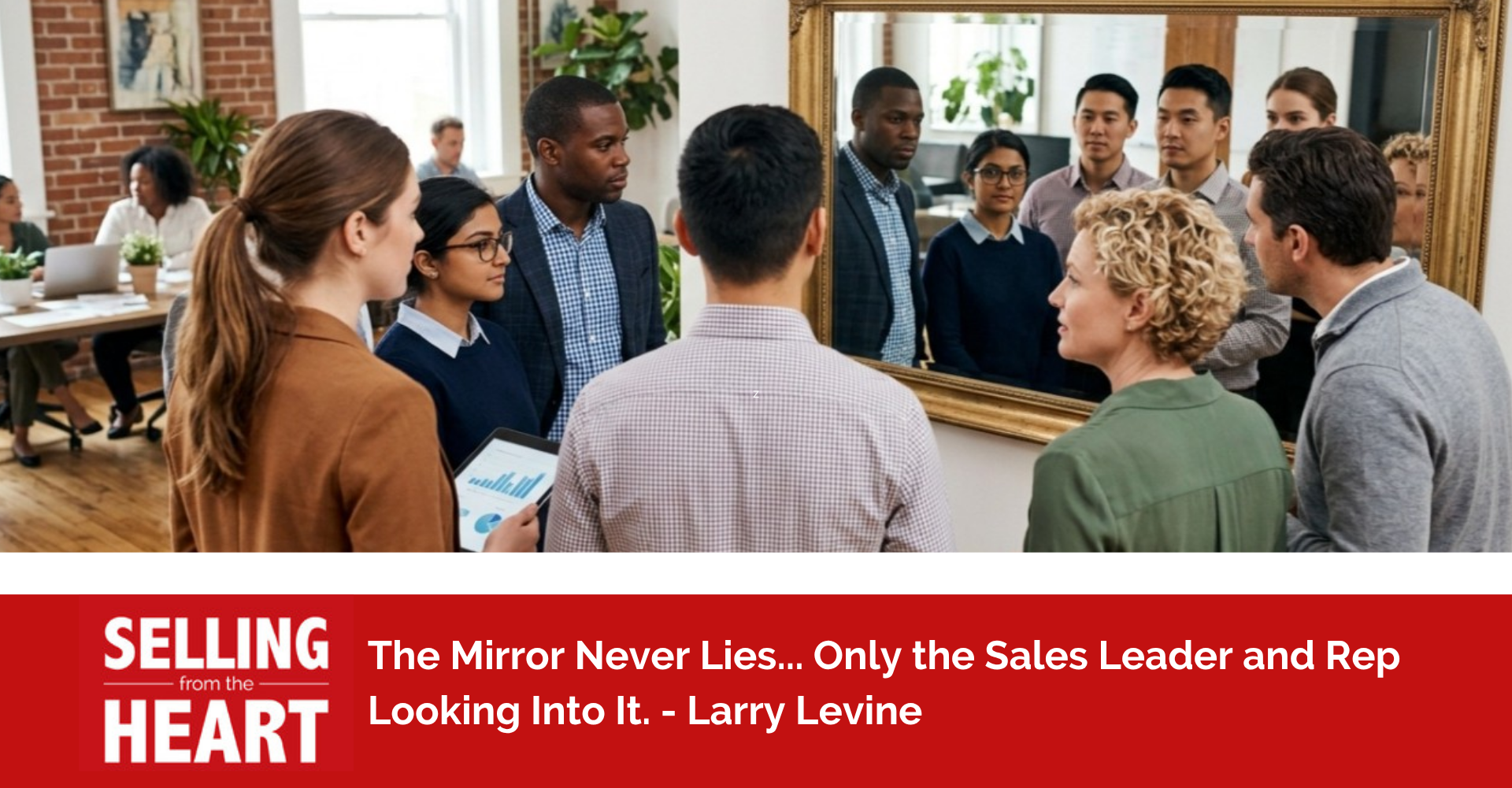

The Mirror Never Lies... Only the Sales Leader and Rep Looking Into It.
by Carmen Cruz
The Mirror Never Lies... Only the Sales Leader and Rep Looking Into It.
Larry Levine challenges sales leaders and reps to take an honest look in the mirror, embrace accountability, and recognize how self-awareness and personal responsibility shape sales performance.
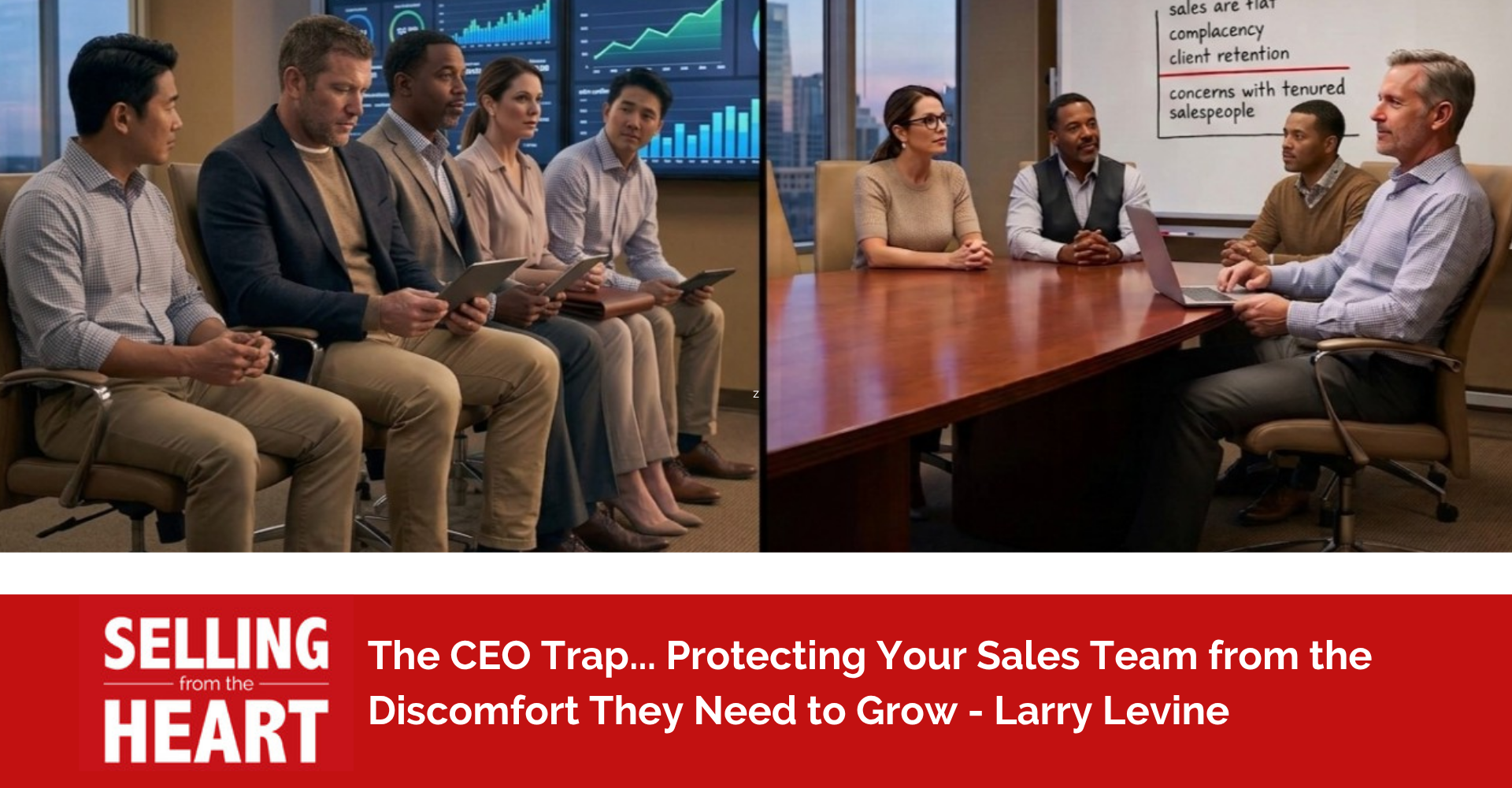
The CEO Trap... Protecting Your Sales Team from the Discomfort They Need to Grow
by Carmen Cruz
The CEO Trap... Protecting Your Sales Team from the Discomfort They Need to Grow
Discover why protecting your sales team from discomfort can limit growth—and how CEOs can create the accountability, challenge, and support salespeople need to improve.

Are You Practicing Like a Professional Athlete Or Just Talking a Big Game?
by Carmen Cruz
Are You Practicing Like a Professional Athlete Or Just Talking a Big Game?
Larry Levine explores why sales professionals must practice with the discipline of professional athletes to sharpen their skills, build confidence, and perform at a higher level.